A quick diagnosis saved her life: pulmonary embolisms can strike without warning
February 03, 2026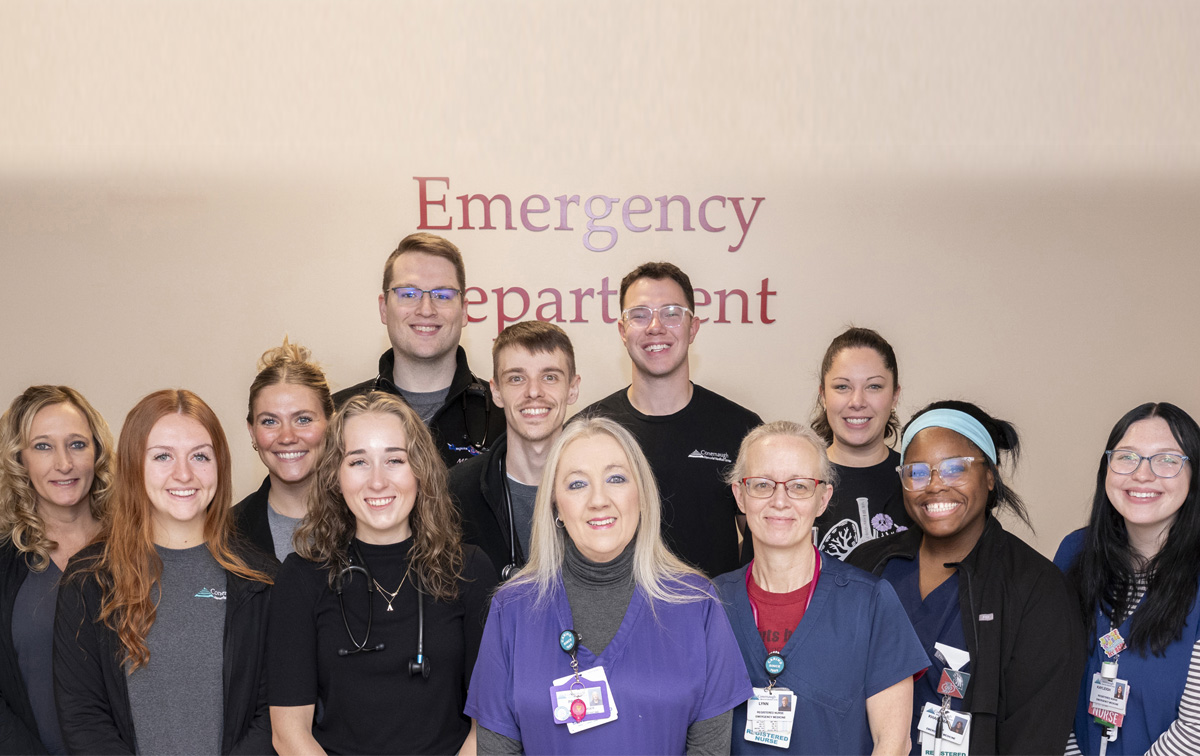
She feared she was dying. Her husband, a paramedic, thought so, too. So, she FaceTimed their adult son and daughter for what she thought might be a final goodbye.
About an hour earlier, Pam Vyhonsky passed out at home. She was rushed by ambulance to Conemaugh Hospital’s Emergency Room (ER), where Dr. D’Shea Mackenzie and Dr. Michael Galuska diagnosed a pulmonary embolism (PE).
As an ER nurse for 38 years, Pam took care of dozens of PE patients. And she knew she could well be staring death in the face.
She had dizzy spells for about two weeks, but attributed it to switching to a generic medication for pulmonary hypertension and congestive heart failure. She was in the process of returning to a brand name prescription. But at about midnight on a foggy September Saturday night, the 59-year-old Geistown resident blacked out in her bathroom.
The PE diagnosis came as a complete surprise, however. Pam had no shortness of breath and no chest pain. She was a very active person with none of the typical risk factors for PE clots, such as hip or leg fractures, spinal cord injury, plaster-cast immobilization, bed rest of three or more days, or major orthopedic surgery.
But a CT pulmonary angiography showed that she had a massive pulmonary embolism, with large blood clots obstructing arteries in both lungs – a condition that can severely impair blood flow and cause life-threatening problems very quickly.
“PE is a mysterious, sneaky, hidden disease,” said Pam, nurse manager of Conemaugh’s ER. “I have no idea how I got it or what caused it. But because of my ER background, I knew exactly what had to be done. And I’m just grateful I was diagnosed by doctors Mackenzie and Galuska and treated by Dr. DeKornfeld.”
Dr. George DeKornfeld, a vascular surgeon, has extensive experience operating on PE. He performed a “thrombectomy” procedure to physically remove blood clots from both of her lungs.
There was one major challenge: Pam couldn’t be fully sedated because of the risk of cardiac arrest. As a result, she remained awake throughout the entire 2½-hour procedure.
After it was completed, Pam’s vital signs started to stabilize and she felt much better.
“After he sucked the clots from one lung, I began to feel better,” she said. “And I was much better yet after he did the second lung.”
After spending a day recovering in Conemaugh’s intensive care unit (ICU) and two days in the cardiac-care unit, Pam returned home. The following Monday, she was back to work.
“People tell me I nearly died and I’m lucky to be alive,” Pam said. “But I feel absolutely fine now, back to work and enjoying my regular life. I just have to take Eliquis (an anticoagulant to keep clots from forming).
“But if not for Doctor DeKornfeld, the operation and Conemaugh’s ER, I wouldn’t be talking with you today.”
Her advice is simple for anyone who has shortness of breath or notices unusual symptoms: Go to the ER.
“Beware of pulmonary embolisms. The faster you’re diagnosed the better. When it comes to PE and blood clots, age makes no difference. I’ve seen it affect many young people. If you feel something isn’t right, don’t ignore it. Go to the ER and get checked. It could save your life – just as it saved mine.”
The ER team that Pam (pictured front-center) credits with saving her life included, from left, Bambi Gailey, Sydney Gavazzoni, Jordan Shroyer, Sydney Farabaugh, (Pam), Lynn Walwro, Kharizma Thompkins and Kayleigh Mikolich. The back row (from left) includes Dr. Damian Mosher, Brent Podgorney, Cameron Roxby and Hope Raslevich.